
An automatic watch you take off keeps running on the energy in its mainspring; for most automatic movements that is roughly a day and a half to two days on a full spring, and less if you only wore it briefly. If it has stopped, turn the crown in the pushed-in position about twenty times clockwise, pull it out to set the time and push it back in — done.
What is power reserve?
Power reserve is how long a watch keeps running on a full mainspring without new energy. In an automatic, that energy comes from the rotor, which spins when you move your wrist (how that works is explained in how does an automatic watch work). The moment you take the watch off, the supply stops and the movement lives on its reserve.
Two things decide how long that lasts: how full the spring was when you took the watch off, and how much the movement uses per hour. The second is fixed; the first depends on you.
Why does it sometimes stop sooner than expected?
The quoted maximum only applies to a fully wound spring. In practice the spring is often only partly wound:
- Worn briefly. A new or stopped watch worn for a single morning only fills part of the spring.
- Little movement. A day at a desk turns the rotor less than a day spent walking.
- Not wound first. Putting on a stopped watch without winding it by the crown means starting from an almost empty spring.
So it is normal for an automatic to have stopped the next morning after a quiet day. It does not point to a defect.
How to wind an automatic by hand
The NH38A can be wound by hand. Here is how:
- Leave the crown in the pushed-in position (do not pull it out).
- Turn it calmly clockwise (away from you), about twenty to thirty times. You feel a light resistance; there is no need to force it.
- The seconds hand starts after a few turns. Keep going a little longer so the spring has a reserve.
- Pull the crown out to the time-setting position, set the time and push the crown back in.
Overwinding is impossible: a slipping bridle lets the spring slide once it is full. Winding by crown does not replace wearing, but it is the best start after a few days without use.
Setting the time without stressing the movement
Preferably move the hands forward. Turning them backwards is allowed on most movements, but forward is the habit that can never do harm. To set the watch to the second, pull the crown out when the seconds hand reaches twelve and push it in at the right moment.
Do not operate the crown while the watch is wet, and always push it fully back in. The watch is water resistant to 3 ATM (splashes and rain), and that resistance relies on a properly seated crown.
Wearing, storing, and watch winders
| Situation | What happens | What you do |
|---|---|---|
| Worn every day | the rotor keeps the spring wound | nothing |
| Not worn over the weekend | may stop by Sunday or Monday | Monday: wind and set the time |
| Weeks in a drawer | stopped, no harm done | wind and set before wearing |
| Rotating several watches | each one stops now and then | wind when you put it on, or use a winder |
A watch winder (a box that turns the watch slowly) is handy if you own several watches or would rather not set the time, but it is not necessary. Standing still does not harm an automatic movement. If you use one, choose a setting with rest periods: the rotor does not need to turn all day.
Store the watch somewhere dry, away from magnets, speakers and the flap of a laptop bag. Magnetism is the most common reason a movement suddenly runs much fast or slow. More in how to care for an automatic watch.
What if it will not start?
If the seconds hand stays still after twenty to thirty turns of the crown, check that the crown was fully pushed in while winding: in the pulled-out position it does not wind. If the watch still does not run, or runs down within a few hours after a full day on the wrist, contact support@zentavo.shop. The watch has a 1-year warranty.
Automatic or quartz: which fits your rhythm?
If you wear the same watch every day, you will barely notice the power reserve. If you rotate often or wear it only now and then, it helps to know you will sometimes need to wind it. For some people that is exactly the appeal of a mechanism: a small ritual before putting it on. If you would rather never set anything, automatic vs quartz watches offers an honest comparison.
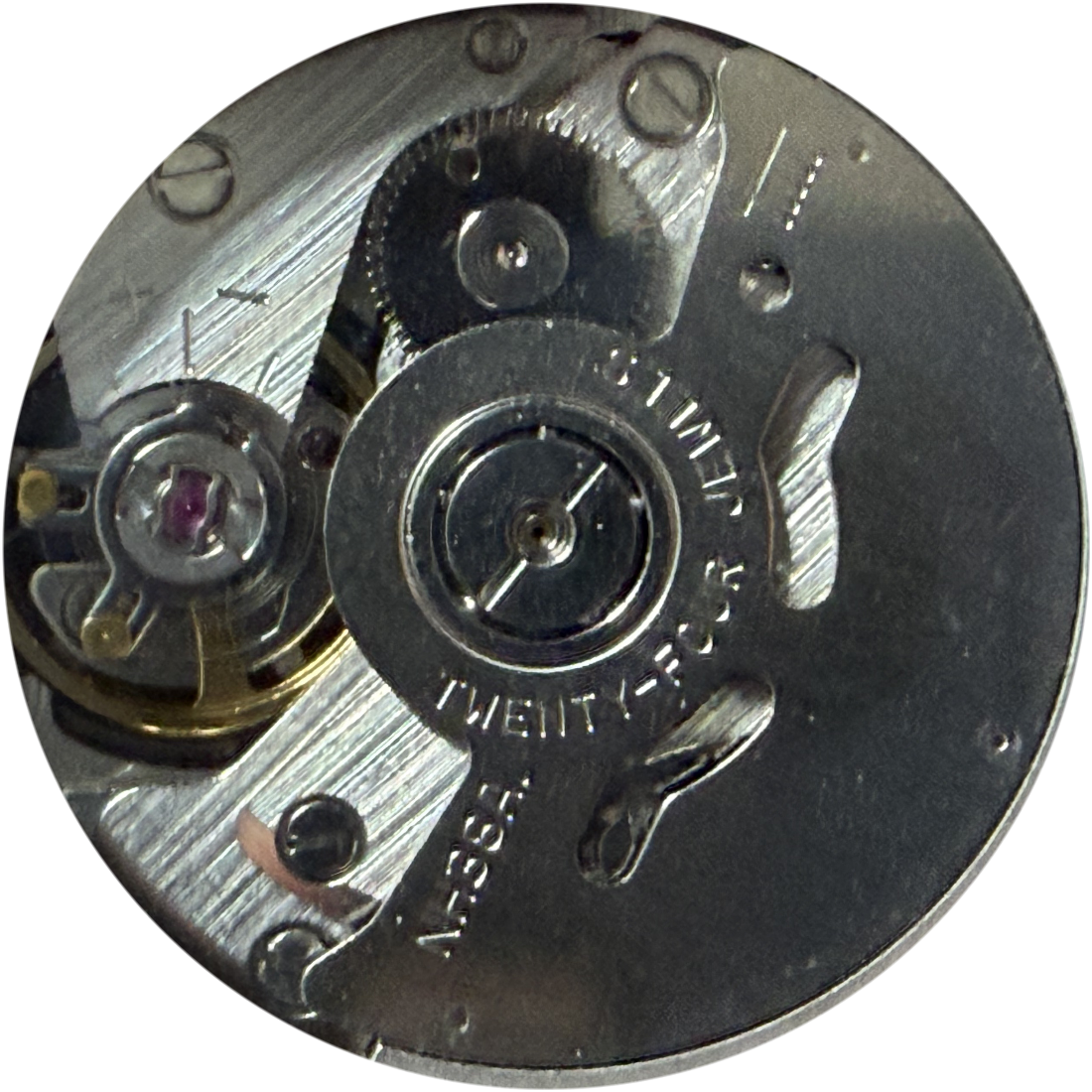
Every Zentavo model has the same movement: the NH38A with 24 jewels and 21,600 beats per hour, behind sapphire crystal in a 42 mm 316L steel case. Through the open window between 8 and 10 o'clock you can see at a glance whether the balance is swinging. See the seven finishes in the collection, for example the Rose.
Frequently asked questions
How long does an automatic watch run without being worn?
For most automatic movements, roughly a day and a half to two days on a full spring. If the spring was only partly wound, it stops sooner.
Is it bad if my automatic stops?
No. Standing still does not harm the movement. Wind it with the crown, set the time and wear it again.
How many times should I turn the crown?
About twenty to thirty times clockwise with the crown pushed in. Overwinding is impossible; a slipping bridle protects the spring.
Do I need a watch winder?
No. It is handy if you rotate several watches, but an automatic can safely stand still.
How can I tell if my watch is running?
Look at the seconds hand or, on a Zentavo, through the open window between 8 and 10 o'clock: if the balance is swinging, the movement is running.