Most watches hide what makes them precious.
We removed the wall. What follows is time being made, in plain sight — and why owning it costs a tenth of what you'd guess.
Seven dials. One heartbeat.
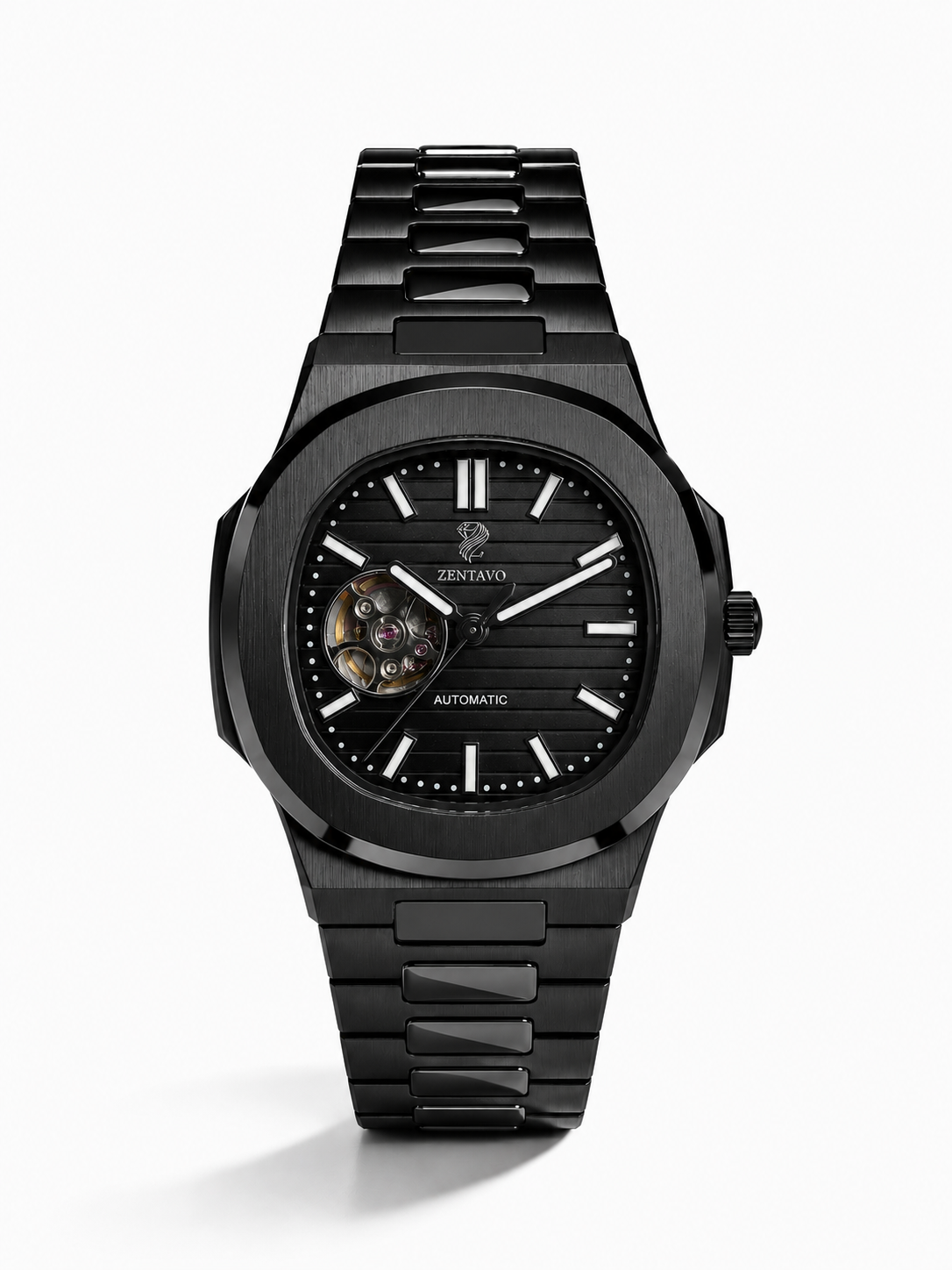
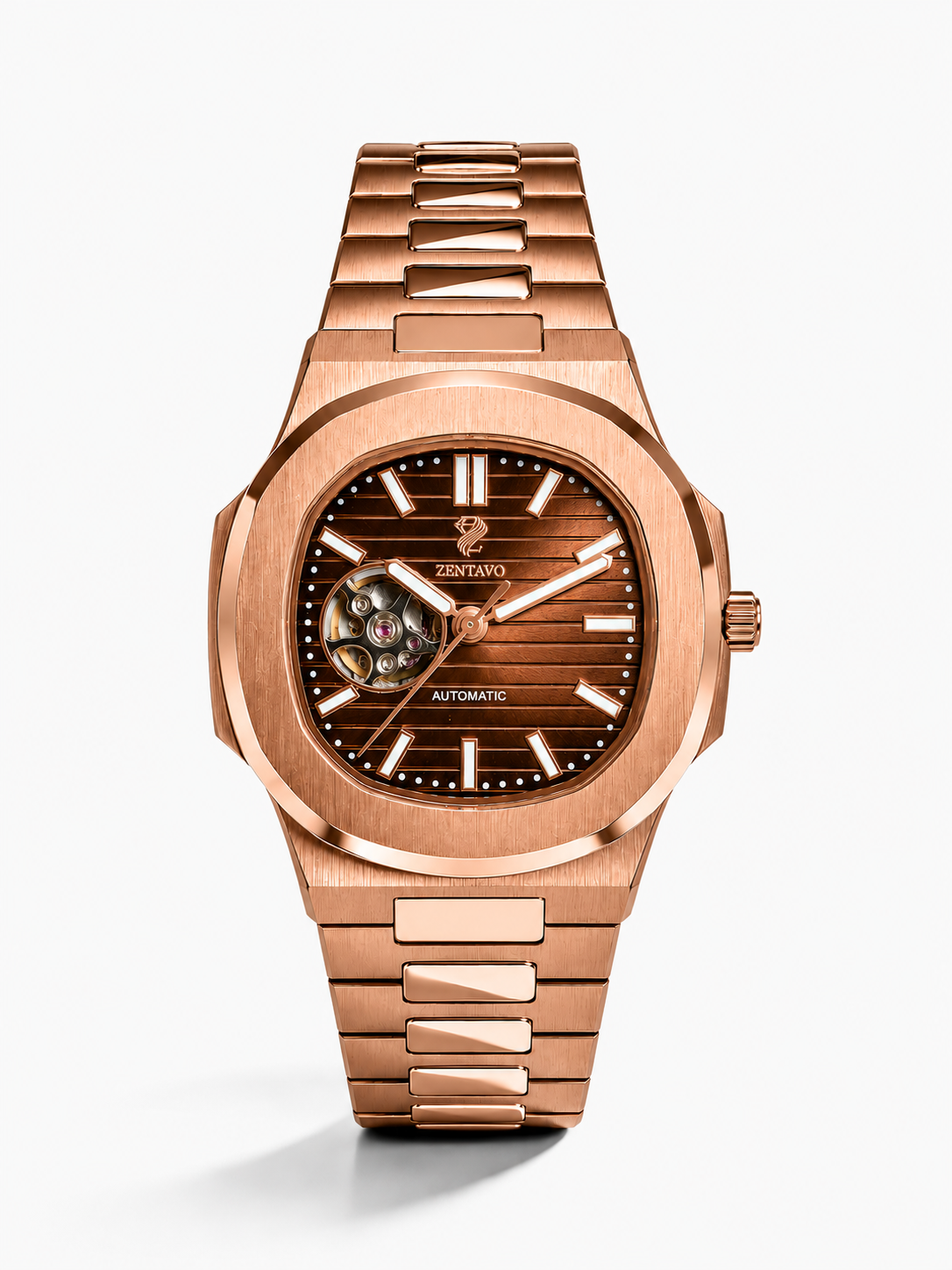
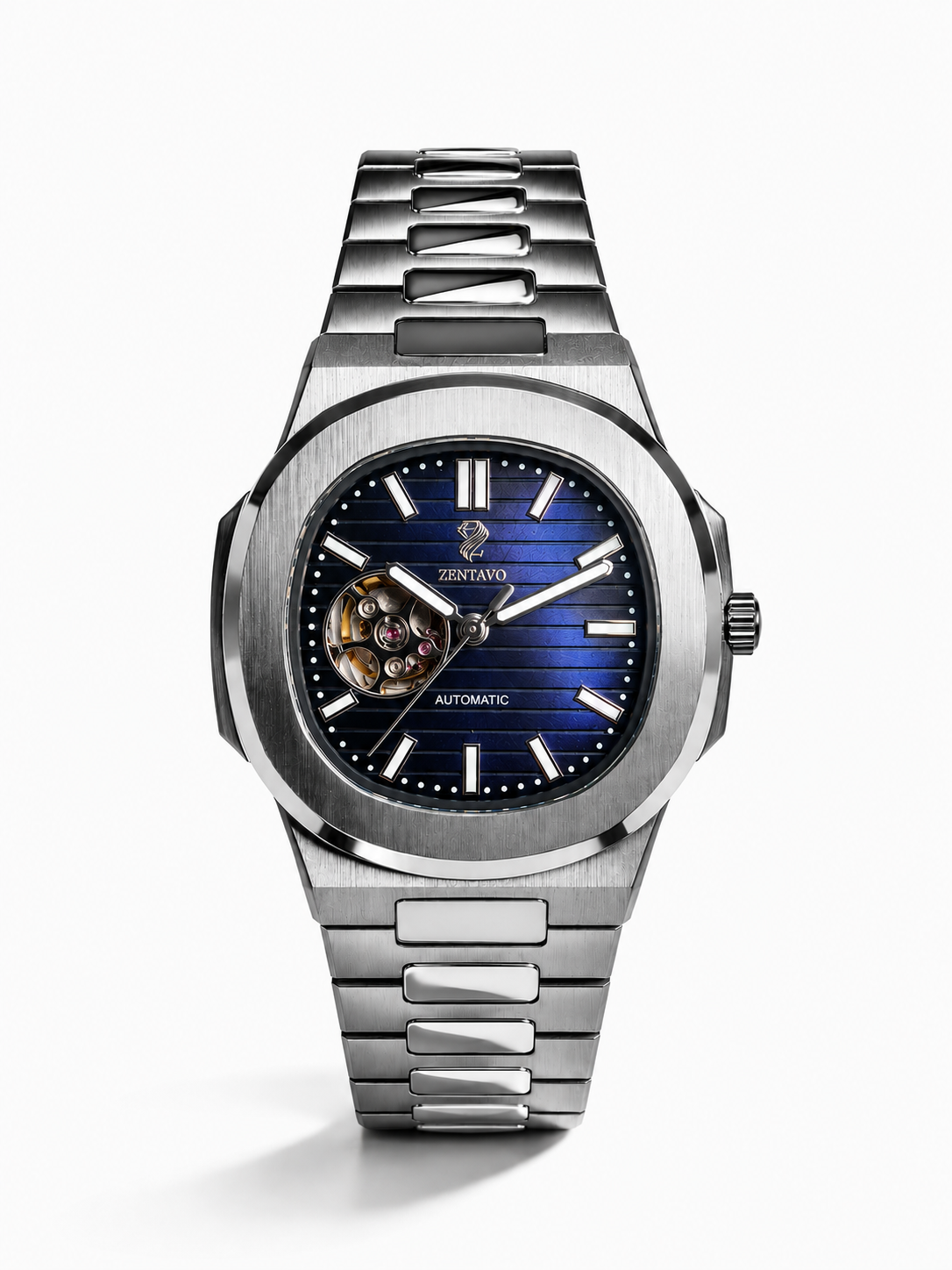
From Noir to Tiffany — seven open-heart automatics, each in 42 mm of 316L steel, on an integrated bracelet that wears like it costs four figures.
But the specs are not why people fall for it.
Wear it for thirty days. If it doesn't feel four-figure on your wrist, send it back — on us.Free returns · 1-year movement warranty
Worn, it comes alive.
Every movement of your wrist winds the spring. Hold it to your ear and you'll hear a faint, rapid flutter — eight beats a second, like a small heartbeat that lives on your arm.
And that sound has a story.
You hear it before you understand it.
Hold a Zentavo to your ear in a quiet room. Past the silence you'll catch it — a faint, rapid flutter, eight times a second. Nothing is plugged in. That sound is a coiled spring and a swinging wheel, an idea barely changed in three hundred years.
The open-heart dial doesn't just tell the time. It shows you time being made — and once you've seen it, a blank dial feels asleep.

Built to be stared at.
Polished, alternating links and a dial that shows its work. The closer you look, the better it gets.
Which raises the obvious question: what does this cost?
Same heartbeat. One less zero.
Put a four-figure skeleton watch next to this one and read the spec sheet twice. Then read the price tags.
What the four-figure houses give you
And what we kept- A self-winding mechanical heart — kept
- 316L surgical-grade stainless steel — kept
- An open dial that shows the movement — kept
- An integrated bracelet that wears heavy and smooth — kept
- The name on the dial — yours to ignore